
Guide
Packaging automation in plain words
The questions we hear most often from customers, with short answers. No jargon, with examples from our projects.
Updated: November 2026
01
Who is MadejPak and how long has it been in business?
In short
MadejPak has been on the market for more than 25 years. We design and integrate packaging lines and automate the end of line. We have worked with many customers since they were packing in a garage, and today they run large factories. We have grown together with them.
We supply single machines and complete automated lines: from the packaging machine, through palletising, to the wrapped pallet. We build grippers, feeders, buffers and pallet magazines ourselves and service the machines. Our headquarters is in Dziewin, Lesser Poland.
Many customers come back to us as their plants grow.
02
What is end-of-line handling?
In short
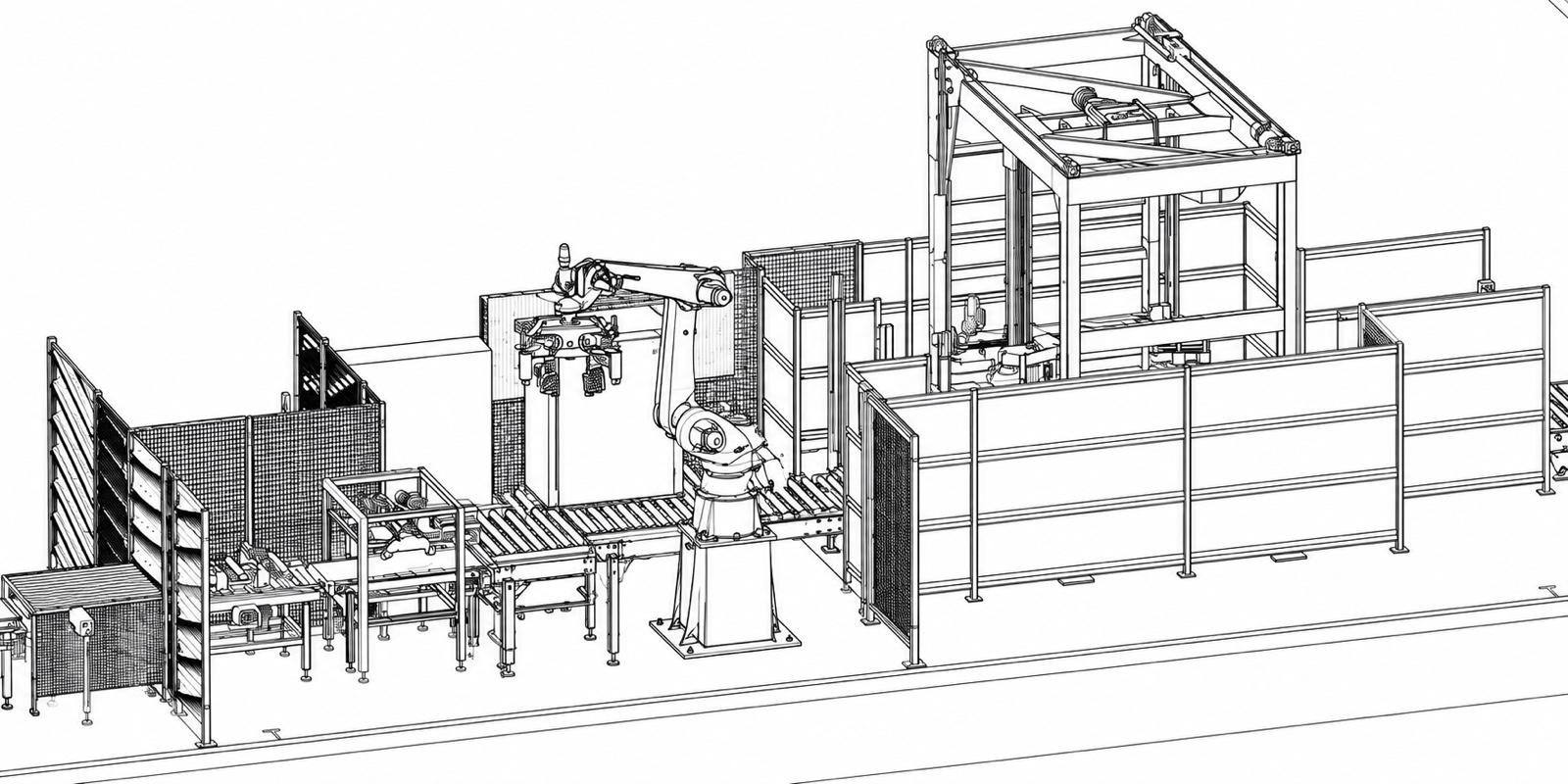
The end of line is everything that happens to the product after it is packed: conveying, case packing, stacking on the pallet and securing the pallet with film. We automate it fully or in stages, starting with taking the product from the machine you already have.
It is usually the most labour-intensive part of a plant. People carry bags and cartons, stack them on pallets and wrap the pallets in film. It is heavy, repetitive work.
An automatic end of line consists of conveyors and buffers, case packing (erecting, packing and sealing cases), robotic palletising and a wrapper. MadejPak combines these stages into one system synchronised with your line.
03
What is a vertical packaging machine (VFFS)?
In short
A vertical machine forms a bag from film on a reel, fills it with product falling from above and seals it. It suits bulk and small products such as granules, fertilisers, pellets, snacks or frozen food.
VFFS stands for Vertical Form Fill Seal. Above the machine there is a device that measures out the portion of product, e.g. a multihead weigher or a doser.
A vertical machine makes, among others, pillow bags, gusseted bags and flat-bottom bags. The bag type is chosen for the product and the customer’s requirements.
04
What is a horizontal packaging machine (flow wrapper)?
In short
A horizontal machine wraps the product, fed on a belt, in a film tube and seals it lengthwise and at both ends. It packs individual products with a fixed shape, e.g. bars, wafers, bakery products, candle inserts or technical parts.
The name flow pack comes from the continuous flow of product through the machine. The abbreviation HFFS (Horizontal Form Fill Seal) is also used.
GSP horizontal machines run, among others, in candle-insert packaging lines at Bolsius and Admit.
05
Vertical or horizontal machine: which one to choose?
In short
The product decides. A bulk or small product measured out in portions is usually packed on a vertical machine. A product in pieces with a fixed shape is packed on a horizontal machine.
If you are not sure, describe the product and the pack to us and we will select a solution.
| Vertical machine (VFFS) | Horizontal machine (flow wrapper) | |
|---|---|---|
| Product | bulk, granular, small | pieces with a fixed shape |
| Feeding | from above, via a doser or weigher | on a belt, horizontally |
| Pack | bag formed from a film reel | film tube around the product |
| Examples | fertilisers, pellets, snacks, frozen food | bars, wafers, bakery, candle inserts |
06
What is a thermoforming packaging machine?
In short
A thermoformer makes its own trays from film: it heats the bottom film and forms cavities in it, into which the product is placed. It then closes the pack with a top film, often with vacuum or protective gas, and cuts the finished packs apart. It is used for cold cuts, meat, cheese, fresh pasta and fish, among others.
Thermoforming is chosen when the product should lie in a sealed tray and stay fresh longer. One machine forms, packs and seals, so there is no need to buy ready-made trays.
An example is the Colimatic THERA 450 with vacuum and modified atmosphere packaging.
See also:
Colimatic THERA 450 →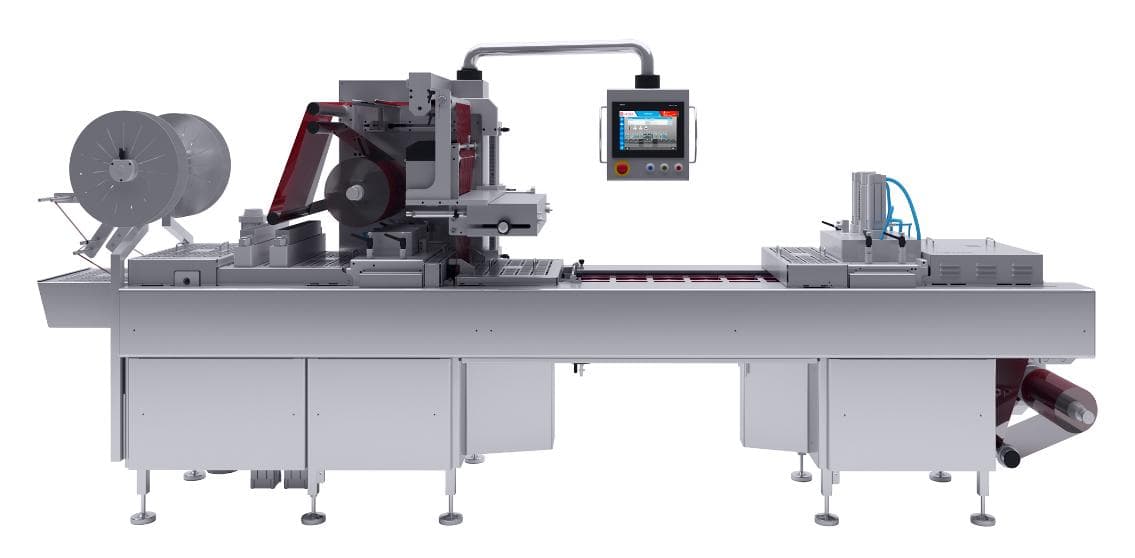
07
What is modified atmosphere packaging (MAP)?
In short
It is packaging in which the air in the pack is replaced with a mix of protective gases, usually nitrogen and carbon dioxide, selected for the product. This slows spoilage and oxidation, so the product keeps its freshness, colour and taste longer.
MAP is used for products that should not be squeezed by vacuum, e.g. fresh pasta, bakery products, cheese or sliced cold cuts. The machine first removes the air, then injects the gas and seals the pack.
MAP requires a machine with a gas system, e.g. a thermoformer. The Colimatic THERA 450 has such a configuration.
See also:
Thermoforming, vacuum and MAP →08
What is bagging and when do we work with Concetti?
In short
Bagging means filling large open-mouth bags with bulk product, together with weighing and closing the bag. For such lines, for big bags and for some palletising projects we work with the Italian company Concetti, a specialist in complete bagging lines.
Concetti, based in Umbria, has been building bagging lines for open-mouth bags and big bags, weighing systems and inline palletisers for the bulk and chemical sectors for decades.
We select the solution, connect it to the rest of the line, e.g. our conveyors and palletising robot, and provide local service.
09
What is a big bag and how is it filled?
In short
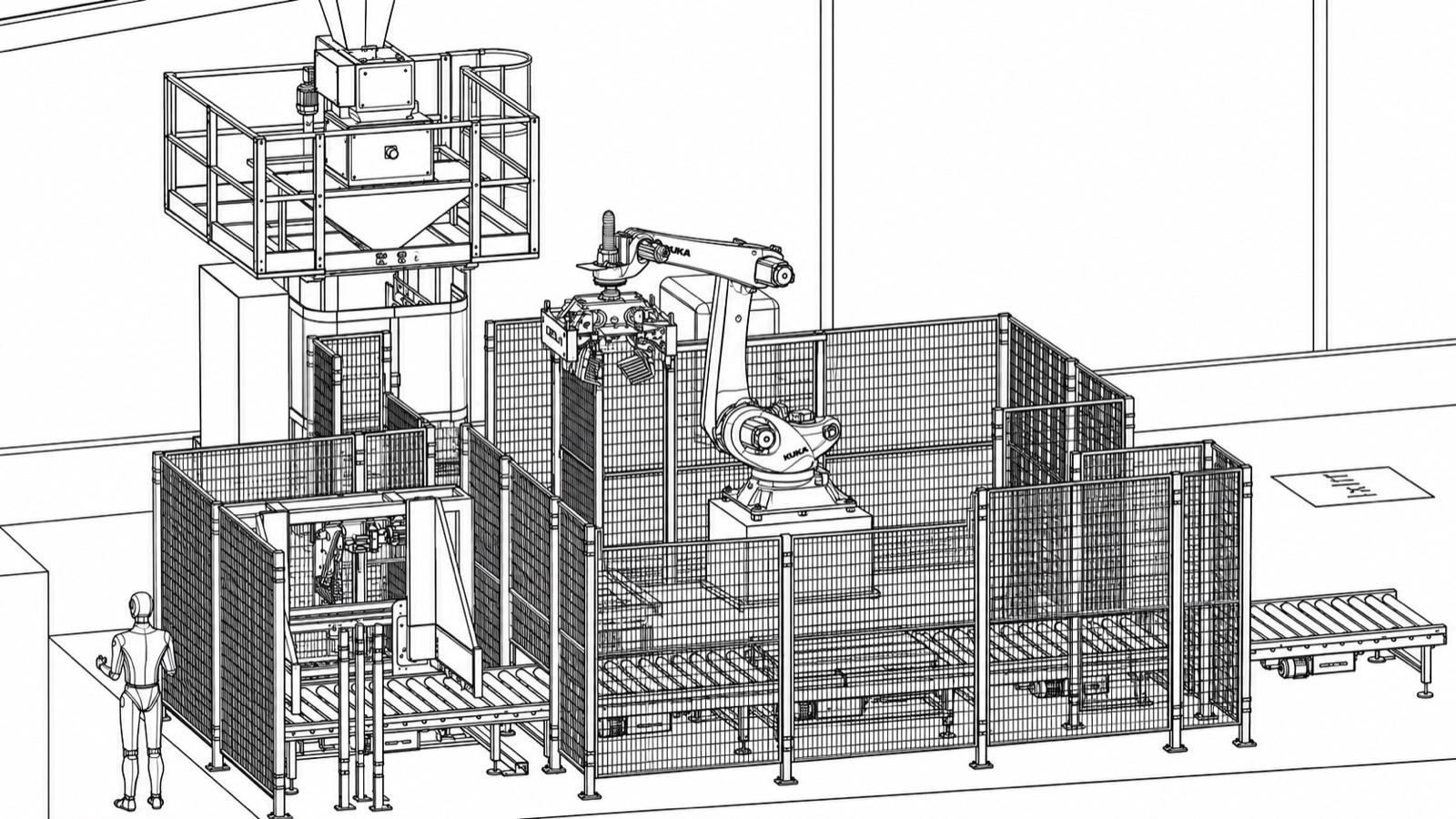
A big bag is a large bag made of strong fabric for bulk products, with loops for lifting by forklift or crane. It usually holds from several hundred kilograms up to 2 tonnes. It is filled at a station that weighs the product, fills the bag and places it on a pallet or conveyor.
Big bags are used for large quantities of raw materials: fertilisers, granules, chemicals, pellets or building materials. One big bag replaces dozens of smaller bags.
We deliver big-bag stations together with Concetti. We select them for the product and connect them with conveying and palletising.
See also:
Bagging and big bags →
10
What is case packing?
In short
Case packing means automatically packing products into cases: an erector forms the case from a flat blank, the product goes in by dropping or by robot, and a sealer closes the case with tape or glue. The case then goes on to palletising.
Erectors form up to 20 cases per minute, and sealers can adjust themselves to different case formats on one line. Output depends on case dimensions.
We combine case packing with palletising and wrapping into one end of line, with our own feeders and buffers between machines.
11
What is palletising and who does it for us?
In short
Palletising means stacking bags, cartons or other packs on a pallet in a fixed pattern, so that the pallet is stable in transport. We design and build palletising cells ourselves, on KUKA industrial robots and DOBOT cobots.
The robot picks the product from the conveyor with a gripper and places it layer by layer. The stacking pattern is changed in the program, without mechanical changeover.
We source robots and wrappers from partners. We make the grippers, feeders, buffers, automatic pallet magazine and the integration of the whole line in-house.
12
What are collaborative robots (cobots) and how do they differ from industrial robots?
In short
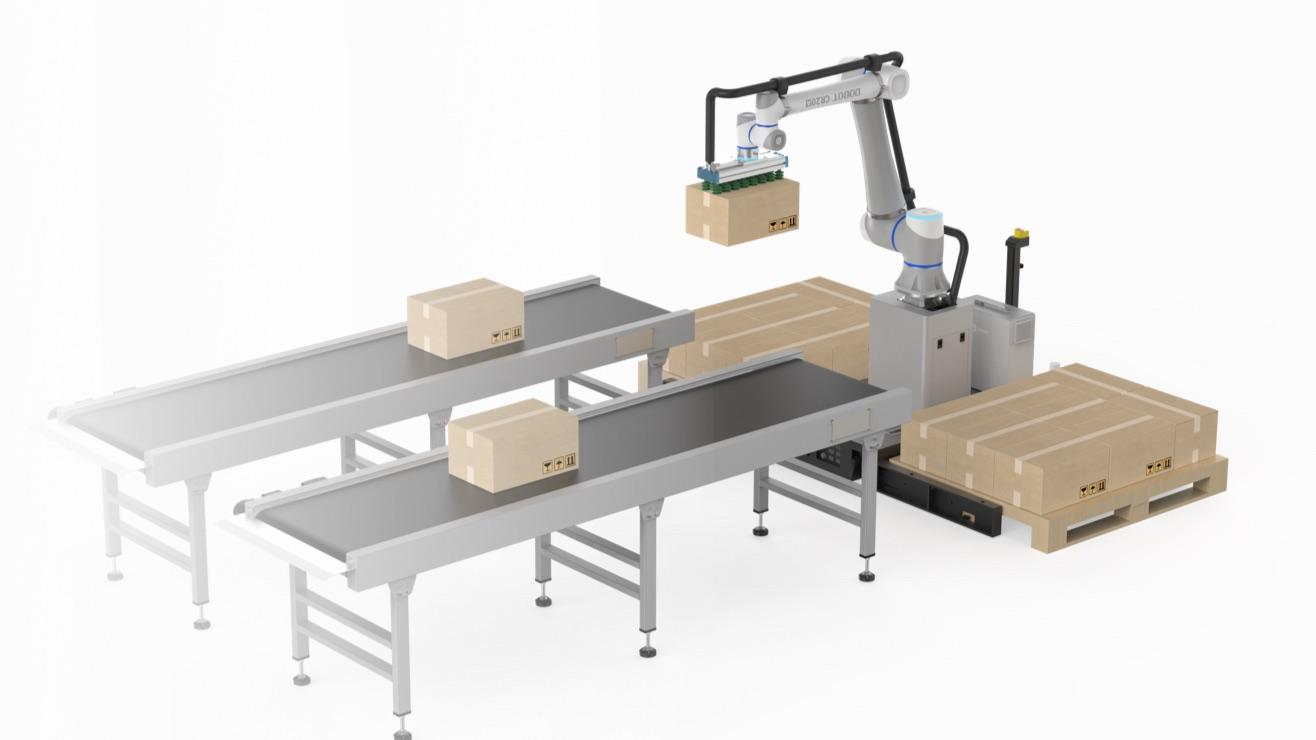
A cobot is a robot designed to work next to people. It is lighter and slower, and after a risk assessment it can work without full guarding. An industrial robot is faster and carries heavier loads, but works in a separate, guarded zone.
We use DOBOT cobots where small footprint and lower cost matter: light cartons and lower output. We choose KUKA robots for bags, heavier cartons and continuous multi-shift work.
Example: a mobile cobot palletising cell at the ice cream and ready-meal producer Alexpol.
13
Why does MadejPak make its own robot grippers?
In short
Because the gripper is the part of the robot that touches the product, and a good one cannot be bought from a catalogue. We design it for the specific product and conditions, so that it grips reliably and lasts for years in dust, humidity or a cold store.
The gripper decides whether the robot picks a bag or carton reliably or drops and damages it. One gripper can also combine several functions, e.g. moving the product and placing slip-sheets between layers.
Because we design it ourselves, we can quickly modify it for a new format and supply parts. We take care of integrating the gripper with the robot and the control system.
See also:
MadejPak grippers and manipulators →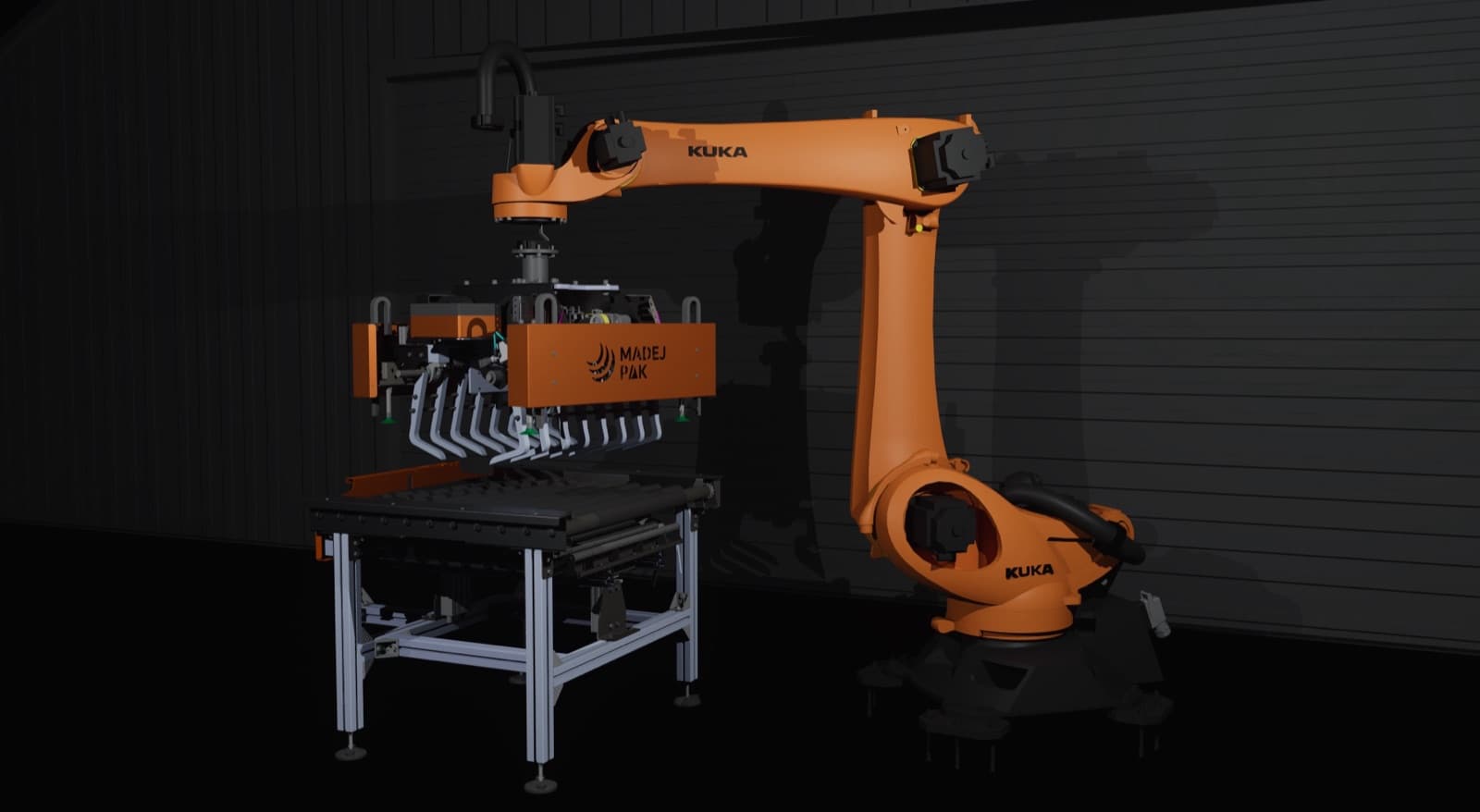
14
Does packaging automation pay off?
In short
In our projects, machines usually pay back within 8 months to 3 years. Fastest where the line runs several shifts and several people work on packing or palletising today.
The payback time depends mainly on the number of shifts and working days, the number of people who move to other tasks, labour cost, line output and material losses. At the paper bag producer Dobis, material consumption fell by almost 50%.
We prepare an exact calculation after analysing your line, together with the offer.
15
There are not enough people for packing and palletising. What can be done?
In short
Let automation take over the heaviest and most repetitive work: carrying bags and cartons, stacking pallets and wrapping. People move to supervision and lighter tasks, and the line does not stop when a shift is short-staffed.
Manual palletising of 25 kg bags is work for which it is hard to find and keep people, and it puts a heavy strain on the body. A robot works the same on every shift.
We often start with one cell, e.g. palletising, and expand automation in stages.
16
Why do we supply vertical and horizontal machines from Italy?
In short
Because the Italian manufacturers we work with, Essegi (vertical machines) and GSP / Tecno Pack (horizontal machines), have a long history and a good balance of quality and price. Our customers confirm this in the daily work of the machines.
Italy is known for building packaging machines, and our partners have specialised in them for years.
Essegi machines run, among others, in the lines of Europol (pellets), Certech (cat litter) and Planta (fertilisers), and GSP machines in candle-insert packaging lines at Bolsius and Admit. We provide selection, line integration and service locally, in Poland. Concetti (bagging and big bags) and Colimatic (thermoforming) are also Italian.
Have a question that is not here?
Call or write to us. We will answer simply, without jargon.