
Ready-made palletising cells
Palletising of bags, cartons and unusual loads
Tell us what you pack and we will show you ready-made cell proposals. We take the product from your machine, pack it, stack it on the pallet and secure the pallet.
- KUKA robots
- DOBOT cobot for light cartons
- MadejPak grippers and pallet magazine
- Technowrapp wrappers
Cell selection
What do you pack? We will show ready-made proposals
Three short steps. You see the result straight away and only give contact details when you send an enquiry.
1. What do you want to palletise? (click one option)
Ready-made cells
The four most common applications
We build every cell from proven modules and adapt it to your product.
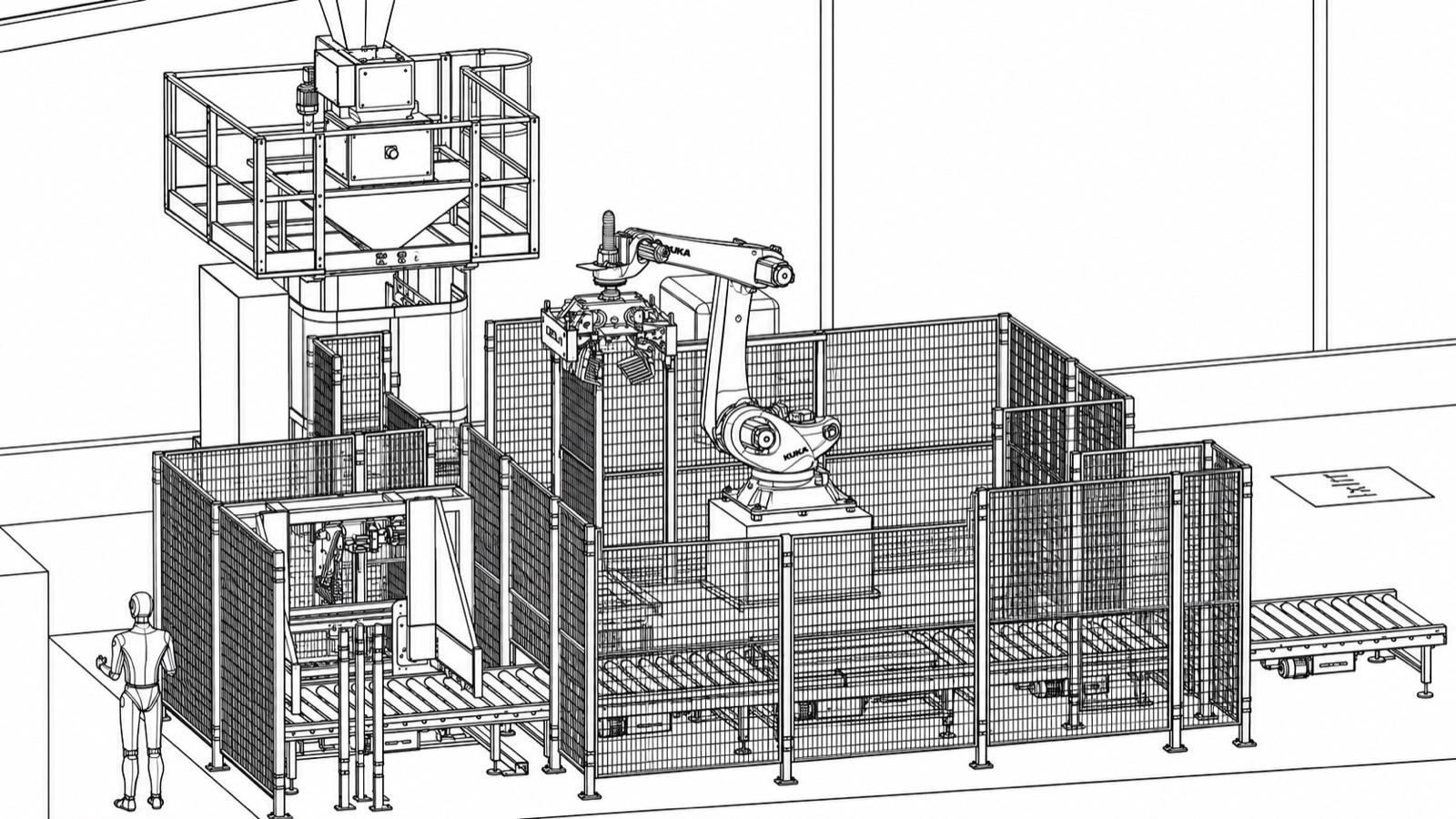
Heavy bags
pellets, fertilisers, building mortars
Heavy bags of bulk product, often in a dusty environment. A KUKA robot with a MadejPak gripper builds stable pallets without operator involvement.
- Gripper designed for the bag type and weight
- Cells working in dust, e.g. with fertilisers and mortars
- The whole line from one company: packing, conveying, palletising, wrapping
Case studies: Europol, Siarkopol S.A., Planta, Promotor
Choose a variant →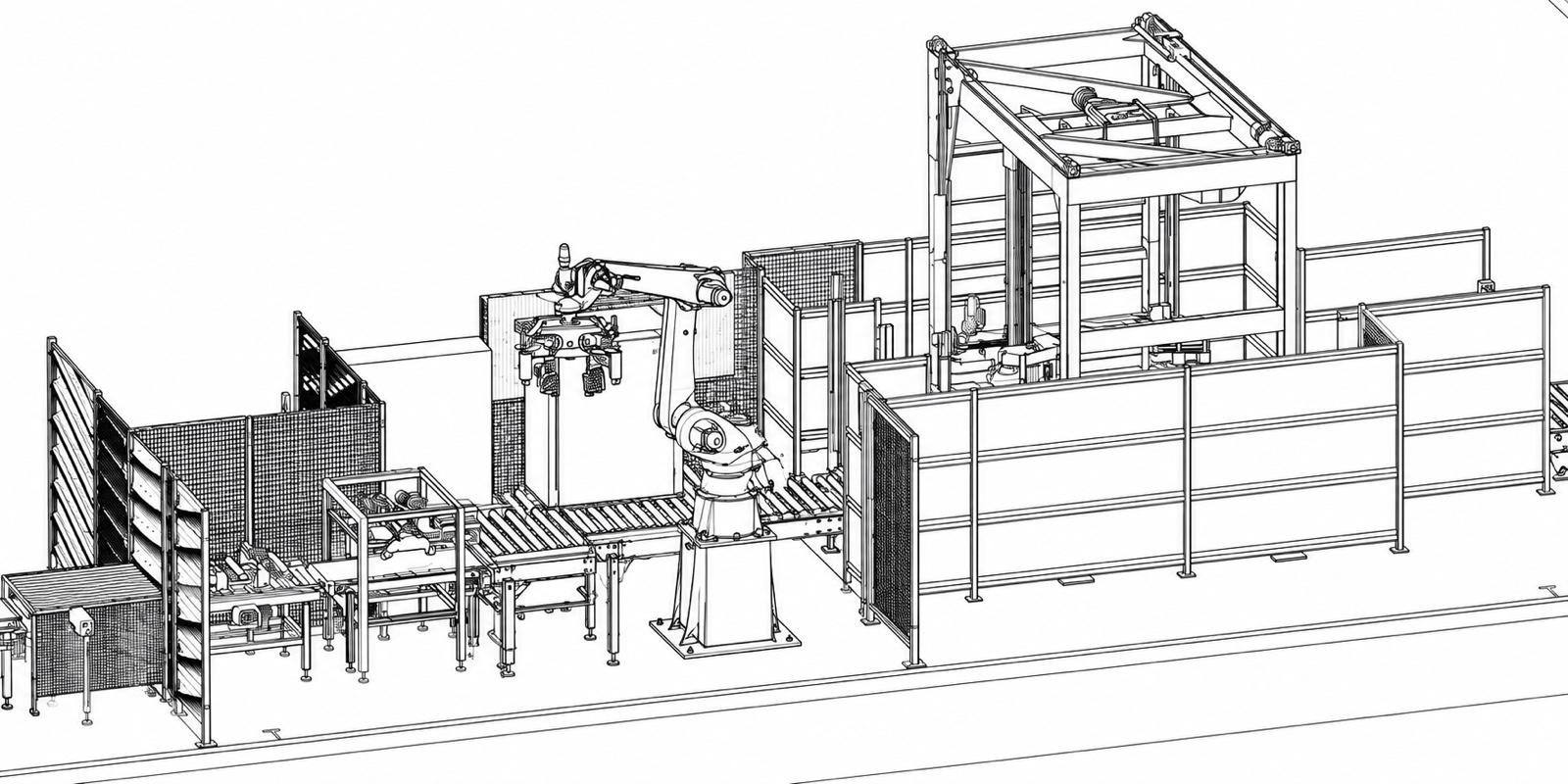
Lighter bags of bulk product
cat litter, granules, smaller bags
A lighter bag of bulk product deforms easily, which can make the pallet unstable. We select the gripper and stacking pattern so that the pallet keeps its shape.
- Stable stacking of packs that deform
- Packs with handles and moisture-absorbing products
- Two packing lines can feed one palletising system
Case studies: Certech
Choose a variant →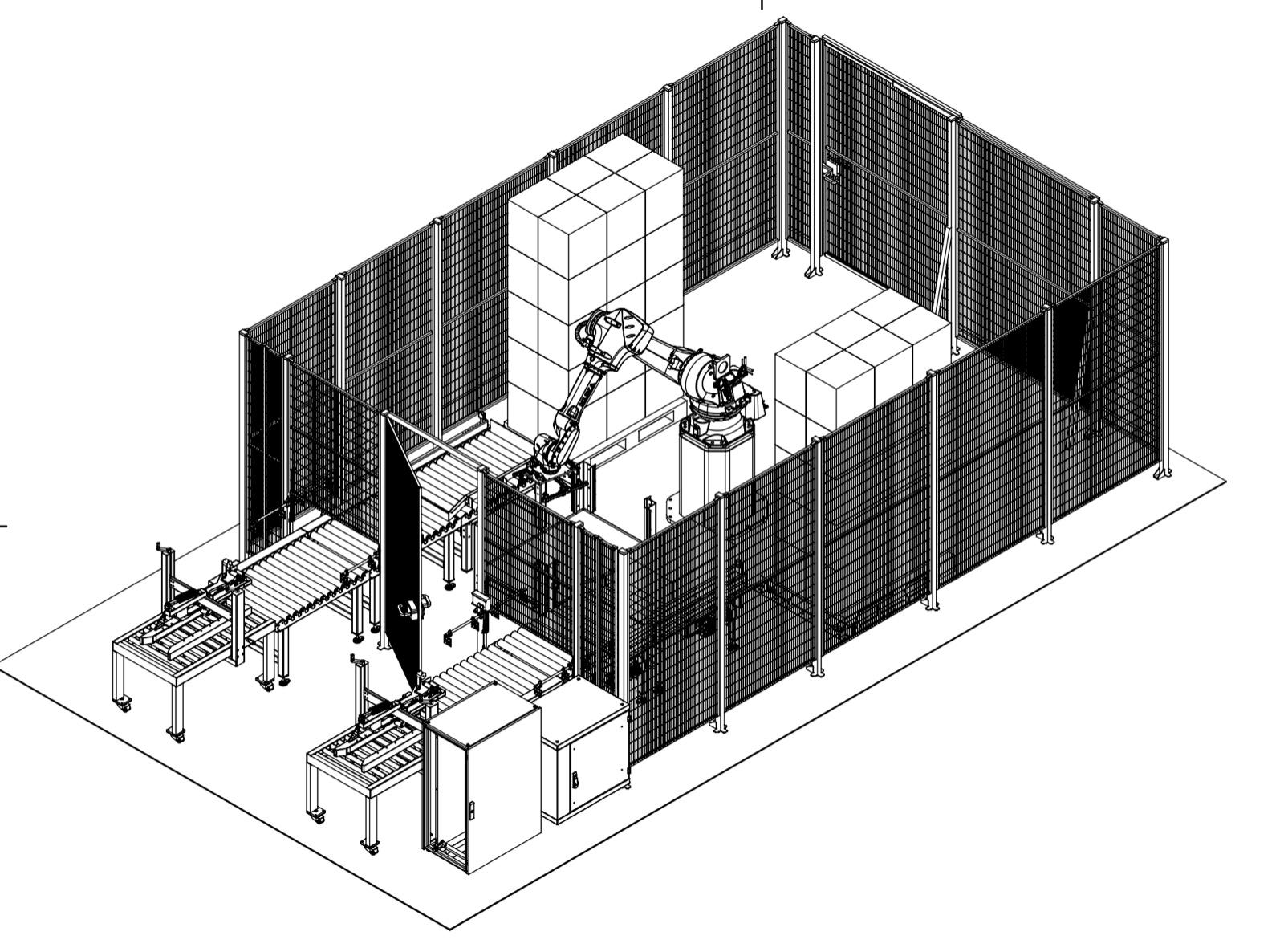
Cartons
cartons and secondary packaging
We stack cartons with a KUKA robot, or with a lower-cost DOBOT cobot for light cartons and lower output. On request we add case erecting, packing and sealing.
- DOBOT cobot as a lower-cost entry into automation
- Stacking patterns changed in the program
- The whole end of line: from case erecting to a wrapped pallet
Case studies: Dobis, Alexpol, Gold Drop, Lazur
Choose a variant →Unusual loads
e.g. furniture, tyres, irregularly shaped parts
A load that is neither a bag nor a carton needs its own gripper and stacking pattern. We design them in-house, and a wrapper secures the finished pallet.
- Gripper designed for the shape and weight of the load
- Feeders and conveying matched to the product
- Pallet wrapping in the line
In-house manufacturing
We make the grippers, feeders, pallet magazine and integration ourselves
We source robots, wrappers and case-packing machines from partners. We design and build the rest of the cell in-house, so we can match it to the product and modify it quickly.
We design and build
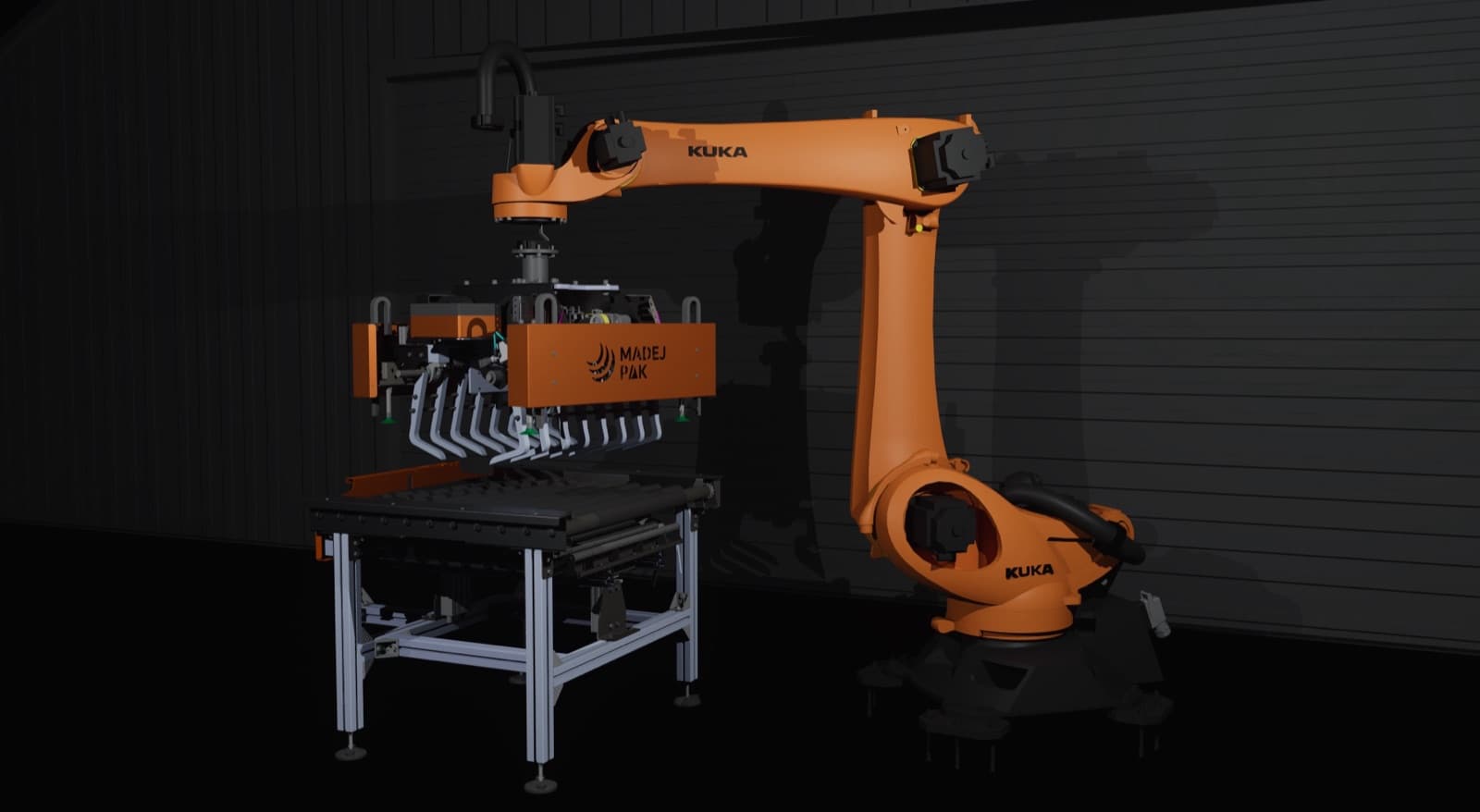
Robot grippers →
Designed for the bag, carton or unusual load.

Automatic pallet magazine →
You load a stack of empty pallets and the magazine feeds them one by one.

Feeders and conveyors →
Product take-off from your machine and transport to the robot.
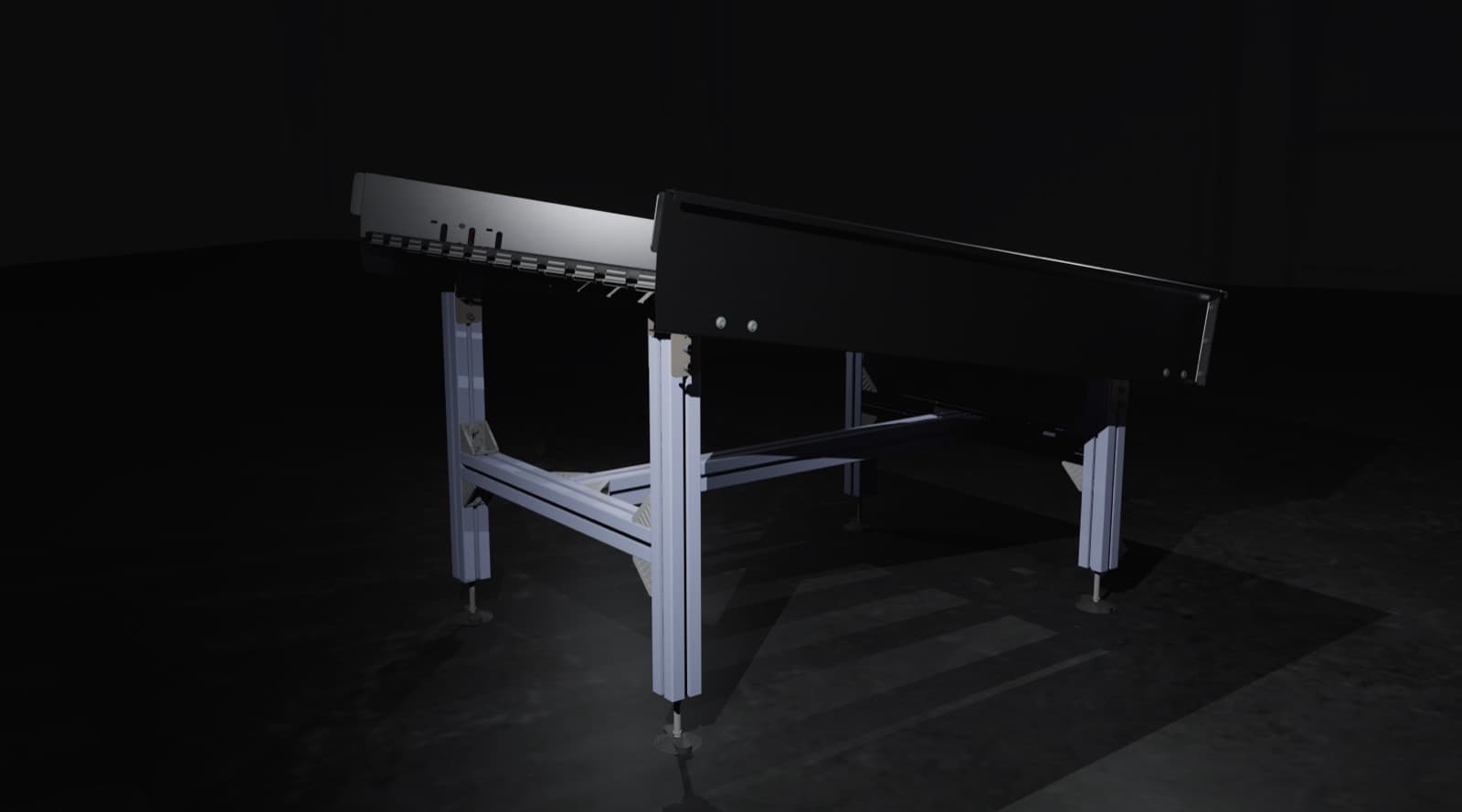
Product buffers →
Keep the line running when palletising briefly falls behind.
- ✓ Control and integration with your line
- ✓ Service and format changes
Case studies
Cells that are already running
Every case study has a description and a video of the line at work.

Automatic pellet bagging and palletising line
See the case study →

Robotic fertiliser packaging and palletising line
See the case study →

Comprehensive fertiliser packaging and palletising line — hopper, vertical machine, KUKA robot
See the case study →

Robotic palletising of construction mortar bags
See the case study →

Cat litter palletising and packaging — two automation phases
See the case study →

Automation of paper bag packaging and palletising
See the case study →

Mobile cobot palletising station for ice cream and ready meals
See the case study →

Full automation of cheese packaging in a refrigeration environment
See the case study →
How it works
From the packaging machine exit to a finished pallet
01
Product take-off
The product leaves the packaging machine and goes onto the infeed conveyor leading to palletising.
02
Buffering
The buffer section evens out speed differences between the packaging machine and palletising and prevents line stoppages.
03
Layer forming
Products are grouped and oriented into an arrangement matching the pallet pattern.
04
Placing on the pallet
The robot places products layer by layer according to the programmed palletising pattern.
05
Pallet and slip-sheet feeding
The pallet magazine feeds empty pallets and, where required, cardboard or film slip-sheets between layers.
06
Securing and take-away
The finished pallet goes to a stretch-film wrapper and then on to the warehouse.
Line integration
Palletising as part of the end of line
We do not deliver just a robot. We design and synchronise everything around the cell.
Infeed conveying
Belt and roller conveyors, transfers and diverters directing products from the packaging machine to palletising.
Buffering and accumulation
Buffer sections even out speed differences and prevent line stoppages.
Layer forming
Grouping and orienting products before they are placed on the pallet.
Pallet and slip-sheet feeding
An automatic empty-pallet magazine and slip-sheet feeding between layers.
Load securing
A stretch-film wrapper as part of the line, synchronised with palletising.
Pallet transport
Roller and chain conveyors taking finished pallets away from the cell.
Guarding and safety
Work zones to machine-safety standards: fences, light curtains or safety scanners.
Line synchronisation
Shared control with the packaging machine or machine communication (Profinet, EtherNet/IP, OPC-UA).
How we work
From the plant visit to service
01
We visit and listen
We visit the plant, look at the line and discuss the problem before proposing anything.
02
We propose a specific solution
Based on the product, output and hall layout, we show what to implement and prepare a quote.
03
We deliver and commission
We bring the cell with conveying and the wrapper, integrate it with the line and start it up at your plant.
04
We train your people
Operators and maintenance staff leave commissioning knowing the cell.
05
We stay after start-up
We service the cell, supply parts and help with format changes. One contact for all technical matters.
Questions
Frequently asked questions about palletising
What do you need to quote a palletising cell?
Product type and weight, pack dimensions, line output, pallet type and the space available. The quickest way is the selector on this page; we settle the rest in a call or during a plant visit.
Is a cobot enough for palletising?
For light cartons and lower output, yes. A DOBOT cobot costs less, takes up little space and can work next to an operator. We palletise bags and heavier cartons with KUKA robots.
Does the wrapper have to be automatic?
No. The Technowrapp wrapper can work automatically in the line after the cell, or as a semi-automatic machine operated by staff.
Can you take the product from our existing packaging machine?
Yes. We take the product from the machines you already have and synchronise the cell with the line. If needed, we also supply the packaging machine.
What do you make in-house and what comes from partners?
We design and build the grippers, feeders, buffers, automatic pallet magazine and integration of the whole line. Robots (KUKA, DOBOT), wrappers (Technowrapp) and case erecting and sealing machines come from partners.
Can the cell cope with dust or a cold store?
Yes, we have such installations: palletising fertilisers, mortars and cat litter in dusty environments, and cheese packing in a cold store with high humidity.
Can one palletising system serve two lines?
Yes. At Certech two parallel cat litter packing lines feed one palletising system with two KUKA robots.
Do you provide service?
Yes. We service the cells, supply parts and help with format changes. You have one contact for all technical matters.
Not sure which variant to choose?
Use the selector or describe your product. We will visit, look at the line and propose a cell.